Sunday, 17 November 2013




Saturday, 9 November 2013
Lynsey Addario- War Photographer

Born on the 13th of November 1973 in Connecticut,
USA, Lynsey Addario grew up with a passion towards photography. She graduated
from the University of Wisconsin in 1995 with a B.A degree in International
Relations. However, Addario is currently based in London, England where she pursues
a career of a photojournalist, photographing for three major organisations
‘The New York Times’, ‘National Geographic’, and ‘Time Magazine’. In 1996 she
moved to Buenos Aires, Argentina to commence her photojournalistic career with
the Buenos Aires Herald. It was only a year later when Addario decided to
return to New York, USA. Keeping in mind Addario had no previous experience in
photojournalism during her work period in Argentina; she solely focused on conflict
and humanitarian issues. A year later, 1997, the photojournalist worked as a
freelancer for Associated Press, and this lasted for three years. During this
time period, she went to Havana, Cuba where she began a project to show
“influence of capitalism on young Cubans.”
With the start of a
new decade (2000), the young photojournalist decided to cross all the way to
the other side of the world; a completely different environment where she can
experience a new life style in the diverse New Delhi, India. Throughout her eight-month
experience there, she visited Afghanistan to “document life and oppression
under the Taliban.” In addition to this, Addario travelled to Pakistan and
Nepal to cover general press photographs. In 2001, she moved to Mexico City for
a short time frame, where she worked for New York Times, however shortly after
September 11th events, the photographer moved back to South Asia to
deepen her Afghan coverage. This time though, Addario went to Afghanistan with
a new objective, she was more interested in “women’s education issues there.”
After settling in Southern Asia for two years, it was time for the American
photojournalist to move to Istanbul. Her duty however was to cover the Iraqi
war; a zone she settled in for seven months. And in 2004, she settled in
Darfur, Sudan and focused on refugee camps around the country. Sudan being a
great central location, gave Addario the opportunity to aim her focus on issues
such as women rights in neighbouring countries like Saudi Arabia, in addition to
other primary issues in Turkey, Libya, South Africa and Lebanon.
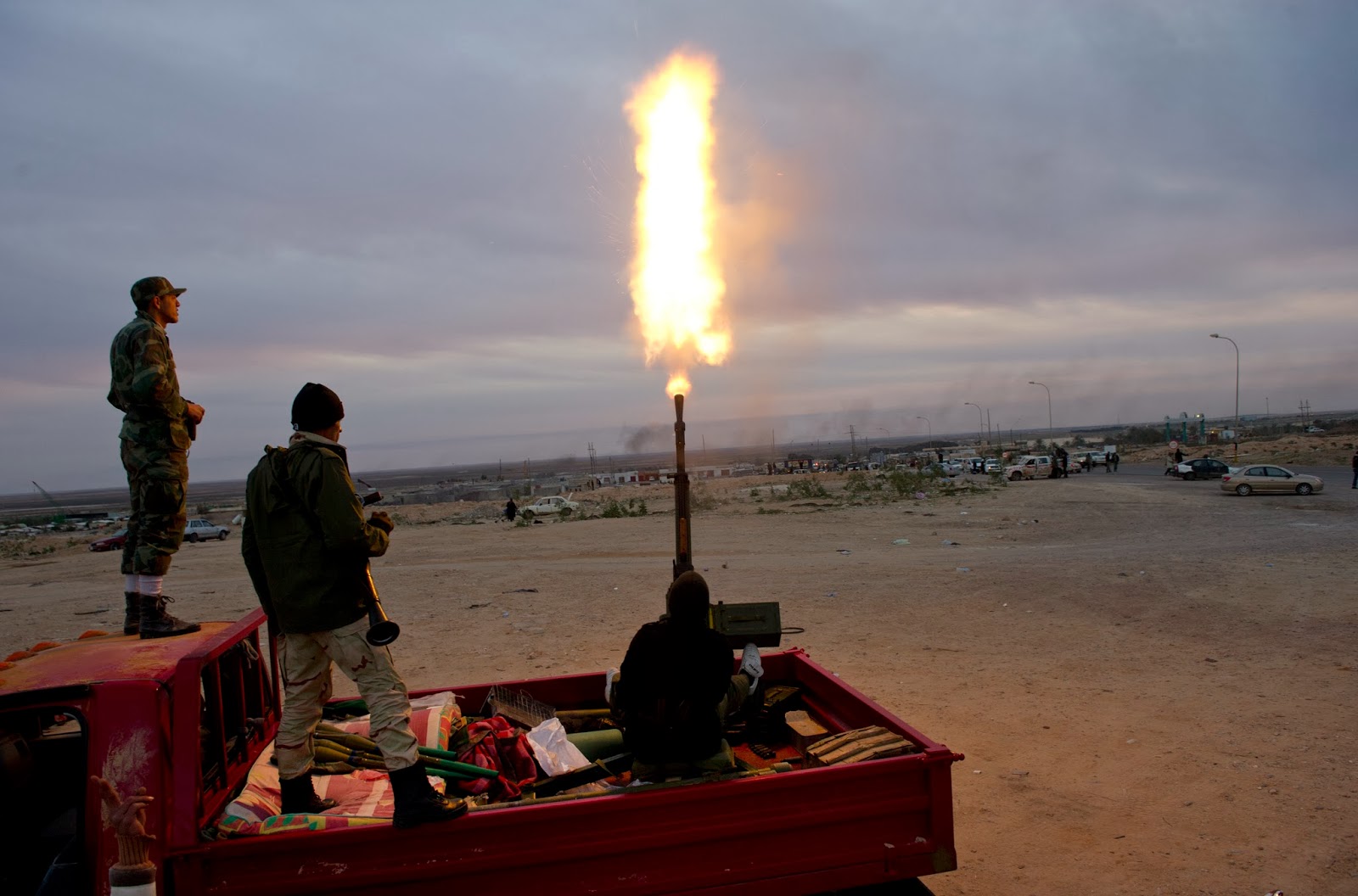
I am personally very impressed with Lynsey Addario’s
photograph selection. To begin with, I am very fond of the diversity of her
images, whether in the far East or the far West; Addario manages to portray her
thoughts clearly through the use of her photographic talents. I realised she
manages to follow a certain pathway when capturing the images; they tend to be
close ups of her target, whether it’s a person, place or even an object. The
young photojournalist focuses on including children in her images, which of
course strengthens the definition of the photograph instantly. In addition, I
am intrigued with Addario’s methodology of focusing on two main issues:
conflict and humanitarian matters. For instance, she visited Iraq and
Afghanistan to visually inform the rest of the world about the catastrophic
wars that took place there. In contrast she went to Sudan to cover refugee
stories, Africa to exhibit sexual abuses towards women, and Saudi Arabia to
illustrate abandoned women’s rights. This multiplicity of photographs that the
young American photographer has captured through her life span have without
doubt influenced my view on the world; now I believe that a picture tells a
thousand words.

Citations:
·
"Lynsey Addario." National
Geographic. N.p., n.d. Web. 03 Nov. 2013.
<http://photography.nationalgeographic.com/photography/photographers/photographer-lynsey-addario/>.
· "Lynsey
Addario, Photographer." Lynsey Addario, Photographer. N.p.,
n.d. Web. 03 Nov. 2013. <http://www.lynseyaddario.com/>.
Friday, 8 November 2013


Thursday, 7 November 2013



Tuesday, 5 November 2013
We Are Family
Diane Arbus

Short Biography:
Diane Arbus was an American Photographer that was born on March 14th 1923 in New York. She learned photography from her husband. It was only in the mid 1960's when Arbus became a well known photographer. She committed suicide in 1971.
What kind of photography did Diane Arbus do?
Arbus's photography was unique as it focused on "societies marginal characters." She fancied the theory of photographing different people in New York, specifically the minor and less important groups of society. For example in 1962 she photographed a "skinny seven year old boy" at Central Park, however this image was different to others as the boy had a fake grenade in his hand. This made the boy a curiosity to her and the only way to analysing him was by photographing him.
Larry Clark

Short Biography:
Lawrence Clark was born on January 19th 1943 in Tulsa, Oklahoma. He is an American film director, photographer, writer and film producer.
What is Larry Clarks Tulsa project about?
Clark has always been fascinated by the subject of young teenagers who use illegal drug substances and are engaged in underage sex and violence. Therefore in 1971, when he published his book (Tulsa), it was revolved and based on his own youth friends whom were drug users. This book was published in black and white.
Nan Goldin

Short Biography:
Nan Goldin is an American photographer born on September 12th 1953 in Washington D.C. She escaped home when she was 13 years old and ever since joined a group of youth who were involved in drugs, sex and violence.
What is the title of Nan Goldin's most known work?
Having accompanied the same group of people for years, Goldin decided in the late 1970's that it was time to document her photographs on them. In 1981, Goldin published a slideshow and a book called ' The Ballad of Sexual Dependancy' and it solely focused on that ring of people she lived with and their daily unusual acts.
Nobuyoshi Araki

Biography
Nobuyoshi Araki is a Japanese photographer born on May 25th 1940 in Tokyo. He studied photography at Chiba University, Tokyo, where he met his wife Yoko Araki. During their honeymoon, Araki took photographs of his wife, and later published a book named ' Sentimental Journey'. His wife died in 1990.
What is Araki's photography and philosophy about now?
Araki's main topics in photography include 'Self and Life', 'Sex', 'Death' and 'Modern Tokyo Scene'. "I only shoot what I want to remember" is his inspirational philosophy. He debates that in order to remember a certain time period in life, one has to capture that moment. Therefore, it didn't matter whether the moment was of happiness or sadness. This is why for example, Araki produced a book on his wife's death and funeral, because to him this was a moment in life which had to be remembered.
Richard Billingham

Biography
Richard Billingham is an English photographer born on September 25th 1970 in Birmingham.
What is Richard Billingham's work about?
Billingham's photography varied, however his most crucial photo book which grabbed people's attention was called ' Rays A Laugh'. This photo book told the story of his parents through the use of photographs. It documented the life of his "alcoholic" father and his "obese" mother who was covered with tattoos.
Do you think photographers tend to prey on vulnerable people?
I personally believe that photographers do tend to target vulnerable people when capturing a photograph. This is because people who seem to be exposed to harm, whether physical or mental, can add uniqueness and depth of meaning to the photograph. This is exactly what photographers aim for, because the more vulnerable the person in the photograph is, the greater the importance of the image.
Friday, 1 November 2013
Exposure Assessment
Shallow Depth of Field

Great Depth of Field

Slow Shutter Speed

Fast Shutter Speed

Panning

Tuesday, 29 October 2013
The Automobile Society-Proposal

Whether manufactured in Germany, Britain or even Japan, each
car is characterised with unique specifications. The luxurious German cars, the
reliable Japanese cars and the strong built British cars, are all
qualifications that distinguish not only the automobile, however, the owner of
the vehicle as well, in our present day.
I propose exhibiting the unique specifications of different
brand cars through the use of photography. By using German (Porsche), Japanese
(Mitsubishi) and British (Range Rover) cars to photograph both exterior and
interior components, this would entitle me to verify the differences between
the brands and their owners.
There are several reasons behind choosing cars as the main
subject of the project. Initially, I have always been a fan of cars, this is
partially due to the fact that I was born and raised in a country where cars
are a symbolic tool, which define their owner. This of course causes a spark in
society, which leads people to buy luxury cars in order to sustain a level of
visible wealth to others. A second reason would partially be because cars are a
vital piece of technology that have transformed our present form of
transportation to be of ease and efficiency. Therefore, I find it important to
reflect upon all mechanisms of a car through the use of photographs, to show
how significant they are to our modern society.

The target area that my photographs will be taken at is my uncle’s
house in Castleknock, Dublin 15. As mentioned previously, only three cars will
be used for the photo-shoot, each from a different country manufacturer. This
project will commence at the beginning of November and will last for
approximately five months, hence till the beginning of April. Our teacher,
Dragana Jurisic, initially allocated the five months time frame to us. The
advantage of having five months to work on the photo-shoot is the fact that
winter and spring will be two seasons witnessed during the time frame;
therefore the variety of natural color/light that could be used while
photographing is instantly increased.
As mentioned previously, I will aim at showing the distinctions between the three different cars by taking a range of exterior and interior photographs, such as the steering wheel, dashboard, gages, wheels and exhaust pipes etc. This project will definitely influence me into adapting new methods of capturing a photograph. To conclude, the outcome of the project is to demonstrate that no social separation should be regarded due to a type of vehicle, as at the end of the day, a cars core purpose is to deliver from point A to point B.
Citation(s):
- · "Ebony." Google Books. N.p., n.d. Web. 23 Oct. 2013.
Subscribe to:
Posts (Atom)